Showing posts with label Pondicherry. Show all posts

Sunday, June 17, 2012

Alamparai -a photo feature


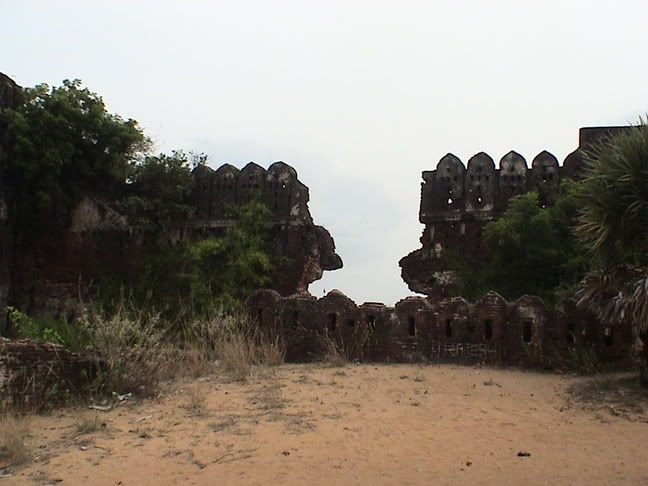
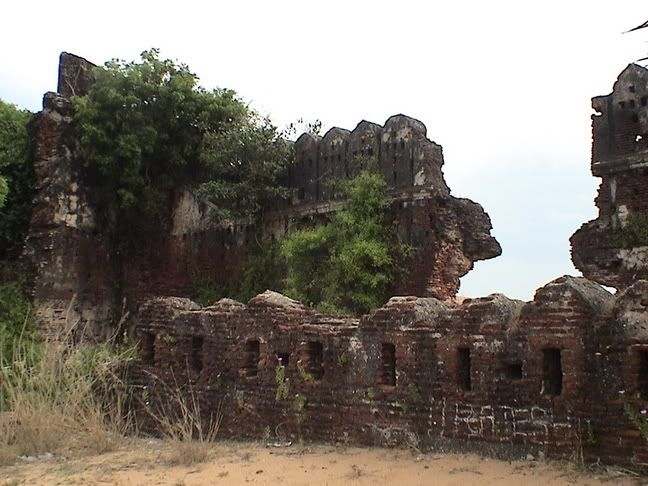
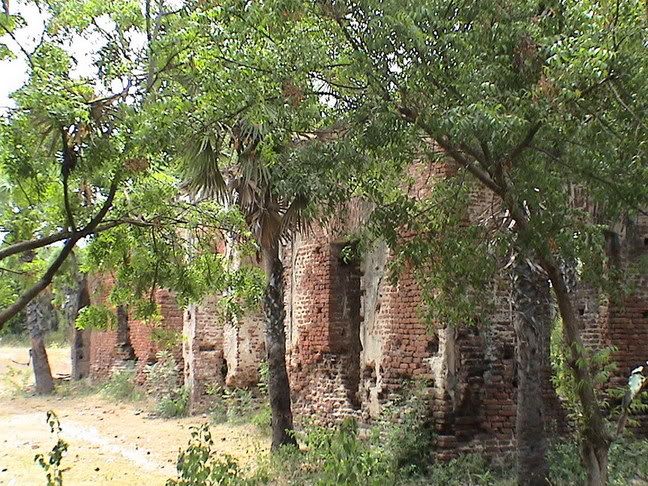
The milestone says about 50 kms to Pondicherry, when I pass a fish market in Kadapakkam. I take a detour and drive through a lost hamlet surrounded by backwaters.  I take another detour and enter  the portals of a port lost amidst the ruins, located right next to the seashore. There is no one in sight. Coconut and palm grooves shelter the broken bricks as the rubbles resonate with the glory of the past.


 This is the 17th century Alamparai fort also called Alampara or Adamparai.  Built during the Mughal era it was ruled by the Nawab of Carnatic and was later on gifted to the French for their support. The British eventually destroyed the fort  and the dockyard which was more than 100 metres long.


A rusted ASI board gives us more information. Alamparai, it says was the ancient land of Idaikazhunadu, mentioned in the literary work, Siruppanatruppadai. The sea port was used for trade by the Arcot Nawabs and  zari , salt and ghee were exported from here. Coins were minted from here as well and later on the mint was shifted to neighbouring Pondicherry. The mint built on a highway near Alamparai here even housed a Shiva temple, a “choultry “ and a pond and was built for the benefit of the travelers coming down this route towards Rameshwaram.


“Do you want to go boating  ?” asks a local . The sea looks inviting, but the sun sends me a warning . I decide to give it a pass although the salts of the sea did beckon us.


Wednesday, May 23, 2012

Inside Story - Pondicherry beyond French India


“ Did you see those trees madam ? “ asked my driver as I looked out to see a road lined with a handful of  trees with stunted and bare branches. “ It was such a beautiful stretch, now the trees have all gone after the cyclone,” he added,” First it was the tsunami, now it’s thane .” 


I was on the road , on the outskirts of Pondicherry town, driving past a huddle of villages and fishing hamlets. It was my millionth visit to the erstwhile French territory and my first after the cyclone Thane had ravaged the town, destroying homes, resorts, streets, trees, livelihoods and plans at one go.  The villagers were yet to come to terms with the cyclone that had raged more than five months ago.

We drove towards the sea, away from the main road and arrived at a secluded beach , except that there were mounds and mounds of sands everywhere. We drove past the dunes and  saw the last mile of land jutting out into the sea.


The Bay of Bengal presented itself  - a canvas of blue surrounding us, as the sea gulls chased imaginary boats. A lone biker stopped at the edge of land’s end as we walked along and looked out into the sea . A handful  of locals were swimming . I was told that adventure and water sports was planned on the sea shore, but had been shelved after the cyclone.

As I drove past the French quarters,  I hoped to see a different perspective of Pondicherry, besides Aurobindo ashram and Auroville.  “Maybe Arikamedu ?” suggested the driver, but I told him that I had already been to the excavated site where trade relations with Romans was discovered ,way back in the first century.  We nevertheless drove towards the ruins and saw some brick walls, remnant of an old monument  , surrounded by wilderness and overgrown roots,  lending an eerie air to the atmosphere.  Cyclone Thane had left its mark here as well.


My journey resumed and  then I met fifty two year old Muthulingam, who showed me another facet to this town.  A therookoothu artist, he was engrossed in an intense performance at  the Big Beach resort, where I chanced upon him. A group of men and some men dressed as women, wearing bold make up danced around, throwing dialogues in the air. Fascinated, I watched as the performers lost themselves in a world of epics, filled with demons and demi gods.

Muthulingam told me that there were performing a play based on the Ramayana and the story veered around Bharata’s son and a demon who came from Ravana’s lineage . He narrated with gusto, breaking into a dialogue , while the other artists danced around in tacky costumes. The performances however were power packed.

Muthulingam later told me that today there were less than 50 therookoothu artists in Pondicherry. He handed his card to me and proudly proclaimed that he had been performing since he was seven . “ They put some  powder on my face  and said , go act..That was the first time I had ever played  a role. I was Sahadeva from Mahabharatha, “ he added, getting nostalgic about how his cousin got him interested in the world of plays and performances. 

Muthulingam and his troupe’s diary was blocked for the next six months. They had selected their plays based on the Ramayana and Mahabharata and the Siva Purana.  “Temples, resorts, villages – we will now go from village to village performing,” he said adding that the shows will be usually in the night and could go on for eight hours.  “ We are paid Rs 9000 a show and we would do about ten shows in a month . Sometimes a show would have even 20 players, but we share all the money ” he shrugged .

Muthulingam was a self taught artist but he lamented that there were not many takers for street theatre, even from his own family today. “ We are too cultured for our own good . No body wants to dance, yell, perform on streets, people do not even consider it art anymore,” he complained as the lights went off on the show.
The sea called .I walked along the shore, letting the waves wash away patterns on the sands . The cyclone might have affected the life of the city, but here were folk artistes trying hard not to let their art go into oblivion. “ Well tourism helps to some extent, today it’s the Big Beach Resort , tomorrow, we may be in another place , but six months later, when the season ends, we will have to  find jobs  as security guards or something else,” Muthulingam’s words echoed as the waves flowed and ebbed. 

 I was on invitation by Club Mahindra for the relaunch of their Big Beach Resort post Cyclone Thane that had ravaged Pondicherry on new years eve last year. This story was published in my column, Inside Story in The Hindu Metro Plus

Friday, December 9, 2011

2011 Flashback - Revisiting Pondicherry


I revisited Pondicherry after many years and went on a heritage walk with the INTACH , understanding the cultural and historical landscape of the French quarters of Pondicherry. I was hosted by Neemrana and Terrascape and I worked on a pull out on the Coromandel Coast for them .


If you like my posts and pictures and if you like to travel with me , join me on Facebook.


Wednesday, November 16, 2011

A morning in Pondicherry

The erstwhile French colony, Pondicherry seemed all sedate and quiet when we went for a morning heritage walk along its shores

If you like my photographs and would like to know more about my journeys,please do join me on Facebook page..TravelwithLakshmi

Friday, December 18, 2009

Driving down the Coromandel Coast - 2


We had paused in our journey from Chennai to Tranquebar at Sadras in Part 1. Part 2 continues as we drive towards Pondicherry . This article was published in Windows and Aisles, the inflight magazine of Paramount Airlines in November 2009. Travelwise is launching this trail in January 2010. Join us as we resume the journey again and take you down to the coast.


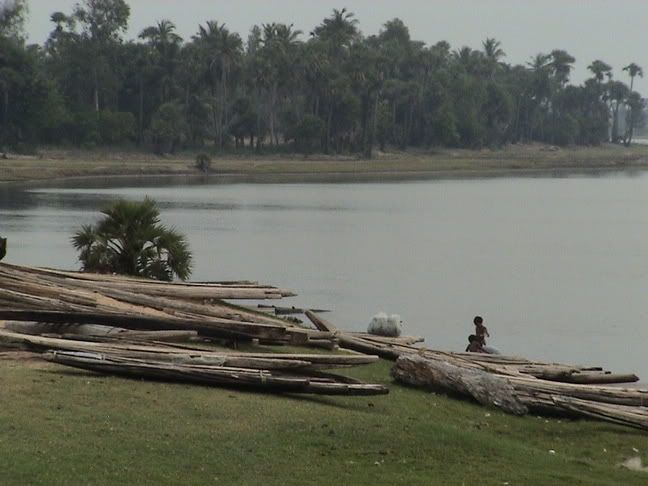
As the past merges with the present, we are driving into another time zone. Bordered by coconut trees, the backwaters looks inviting. A few boats lie scattered. We take a detour from the village of Kadapakkam and enter the portals of another port lost amidst the ruins, located right next to the seashore. There is no one in sight. Coconut and palm grooves shelter the broken bricks as the rubbles resonate with the glory of the past .


We are at the 17th century Alamparai fort also called Alampara. Built during the Mughal era it was ruled by the Nawab of Carnatic and was later on gifted to the French for their support. The British eventually destroyed the fort and the dockyard which was more than 100 metres long.

A rusty ASI board gives us more information. Alamparai, it says was the ancient land of Idaikazhunadu, mentioned in the literary work, Siruppanatruppadai. The sea port was used for trade by the Arcot Nawabs and zari , salt and ghee were exported from here. Coins were minted from here as well and later on the mint was shifted to neighbouring Pondicherry. The mint built on a highway near Alamparai here even housed a Shiva temple, a “choultry “ and a pond and was built for the benefit of the travelers coming down this route towards Rameshwaram.


We are unable to find the highway, but the breeze takes us on a different route. A local fisherman offers us a ride in his catamaran. The sky and the sea merge into a vast expanse of blue . We watch him deftly stroke the waves as he entertains us with stories of film crew who have shot many a scene here.


The sun gets kinder as we drive towards what is left of French India in Pondicherry. The smell of the salts however makes us pause at Marrakkanam . The entire stretch is filled with heaps as a group of workers extract the salt. We chat a bit about their day as a couple shyly walks up to us and asks us to photograph them. “ They are getting married,” laughs another woman, while a grumpy man wants money to talk about salt extraction. We take him with a pinch of salt, show the couple the photographs and move on towards the quaint streetscapes of Pondicherry .

The French connection with Pondicherry is often waxed eloquent by the tourists . But not many speak of the Portuguese , Danish and Dutch who have all laid claim to this port which was another centre of trade . Eventually the French, though defeated by Dutch bought it from them for 16000 pagodas. Pondicherry or Poudoucheri as it was called became the capital of French India. There was a time when Madras was controlled by the French from Pondicherry, says the local policeman with his tall unique hat.We stop at Auroville , grab a quick bite and slip back in time again as we continue our journey.

Saturday, July 9, 2005

IN and around Pondicherry

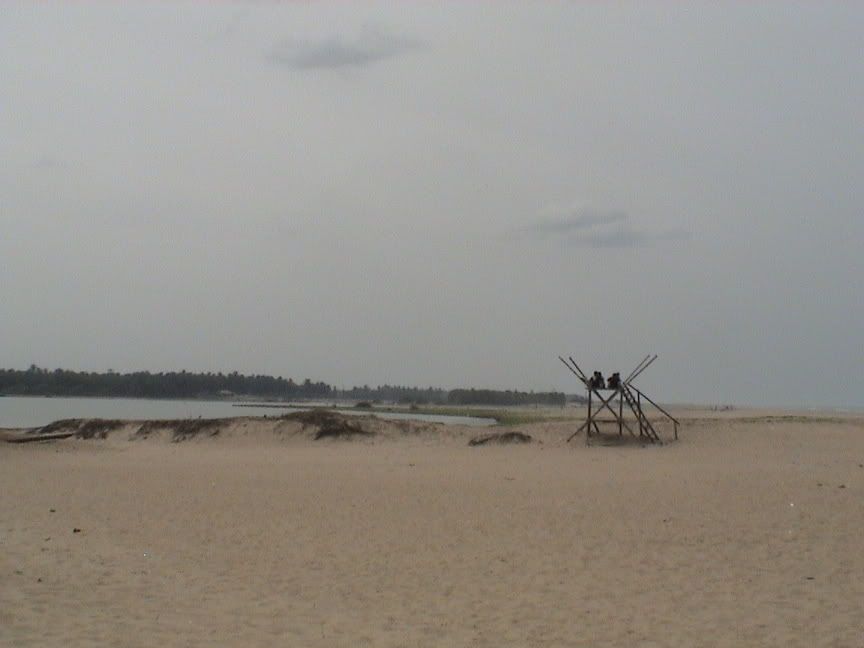
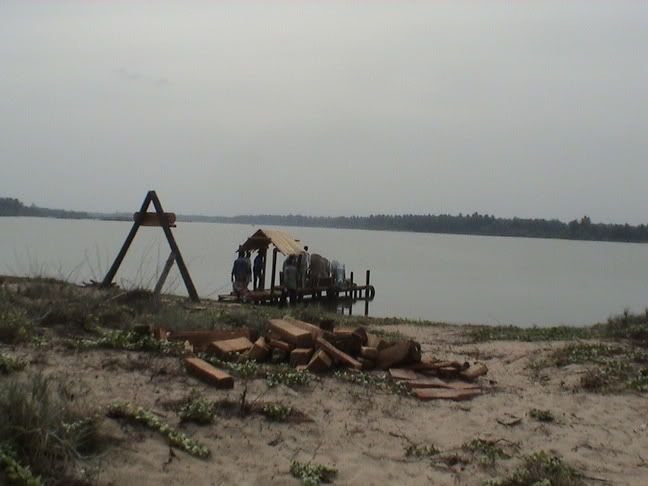
The Alamabara Fort and the Backwaters around


Arikamedu excavation - The Roman connection


Chummnumbur Beach and Paradise Island


Friday, July 8, 2005

Pondicherry - A colonial hangover


It all happened in a moment. The sky changed hues, the landscape altered, even the familiar turned quaint as we reached our destination. Pondicherry is a medley of old world charms, with a potpourri of people; where history meets legends and a confluence of cultures exist. Here, the past and the present blend, as nostalgia lingers in every corner of the city.

We went to Pondicherry in search of new landmarks - to look beyond Auroville and the Aurobindo Ashram .The French influence is almost omnipresent . You can sense it in the streets , in the red kapis of the policemen, in the architecture, the cuisine and even in the accents. It is not just the French, but even Roman connections are evident here . Excavations unearthed in Arikamedu, in the outskirts of Pondicherry have proved that Romans had settled here . Legends associate this sea side town with the ancient Hindu sage Agastya . The 300 odd temples here are testimony to the same . It is difficult to typify this town which smacks of the old colonial era and yet is so distinctively Indian .


Even more difficult is to find accommodation in this popular weekend getaway, that too on a Saturday afternoon. We drove past a few resorts that boasts of a sea view, crossed many a cottage in and around Auroville and entered the heartland of the city, looking for colonial bungalows which offer guest house facilities . Meandering our way through the maze of streets, we set out in search of a heritage guest house , Patricia Guest House.


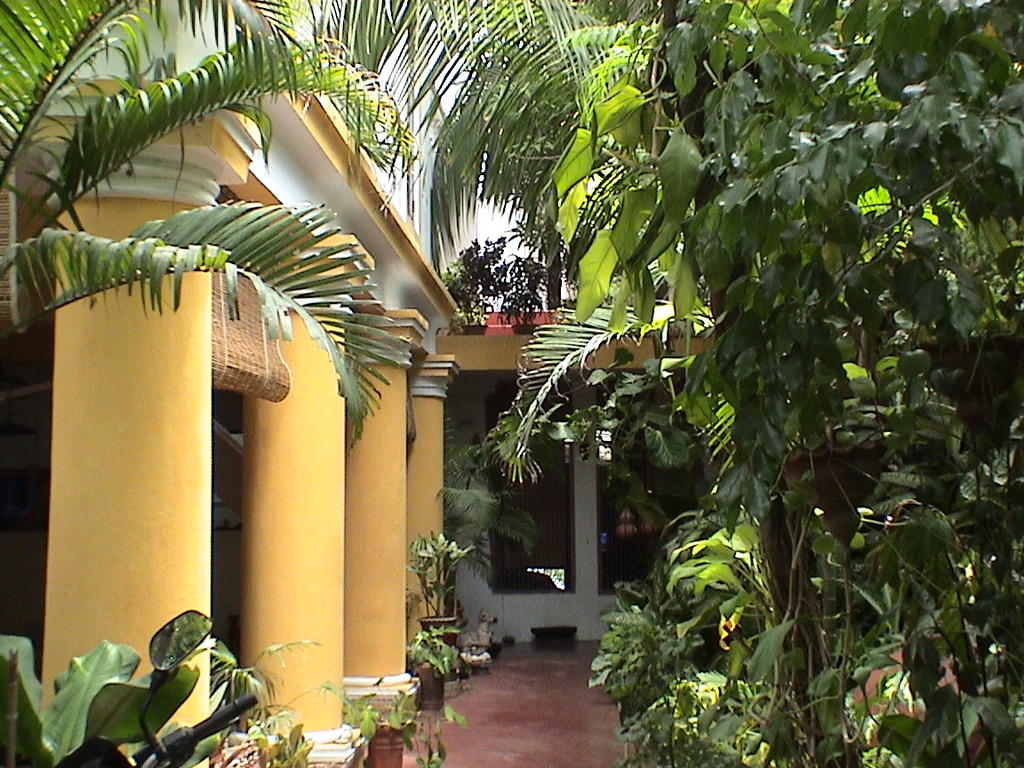
Our enquiries led us to a nondescript door on Rue Romain Rolland shrouded by greenery. We could not see beyond the huge compound wall, not a soul was around ; just a cycle leaned against the door. After a brief wait, the portals of this house opened to unveil two portions of a renovated old bungalow , more than a century old, enclosed by foliage . A small tank of water becomes a fish pond, even as a huge metal pot hangs over it, supported by a rope

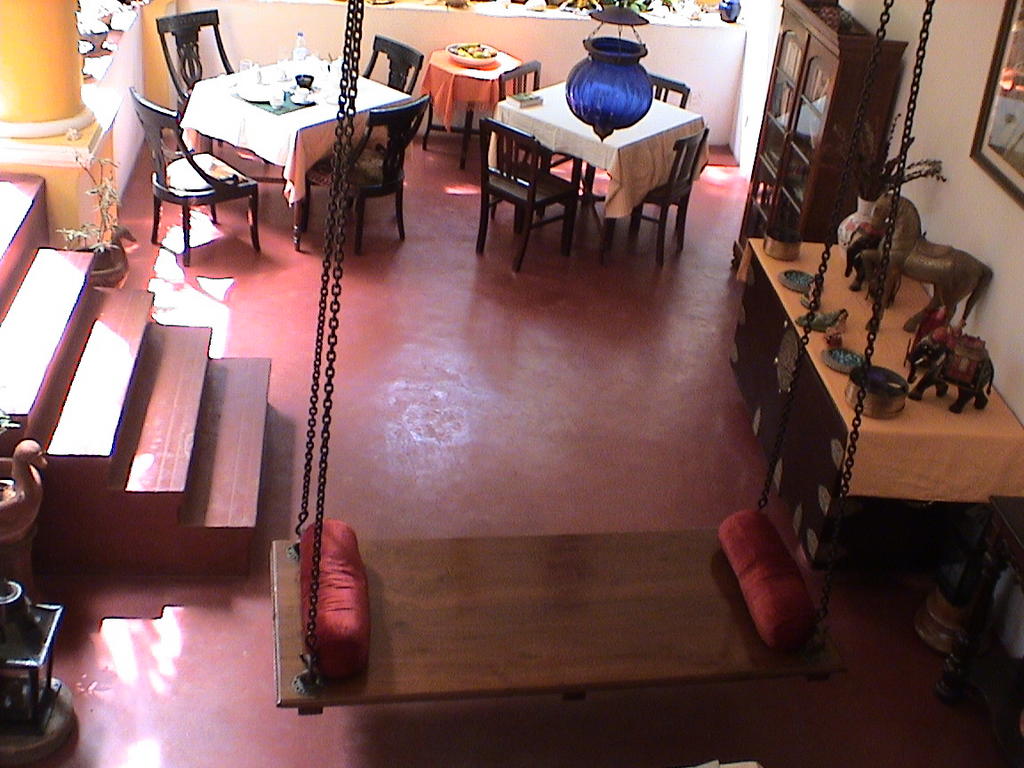
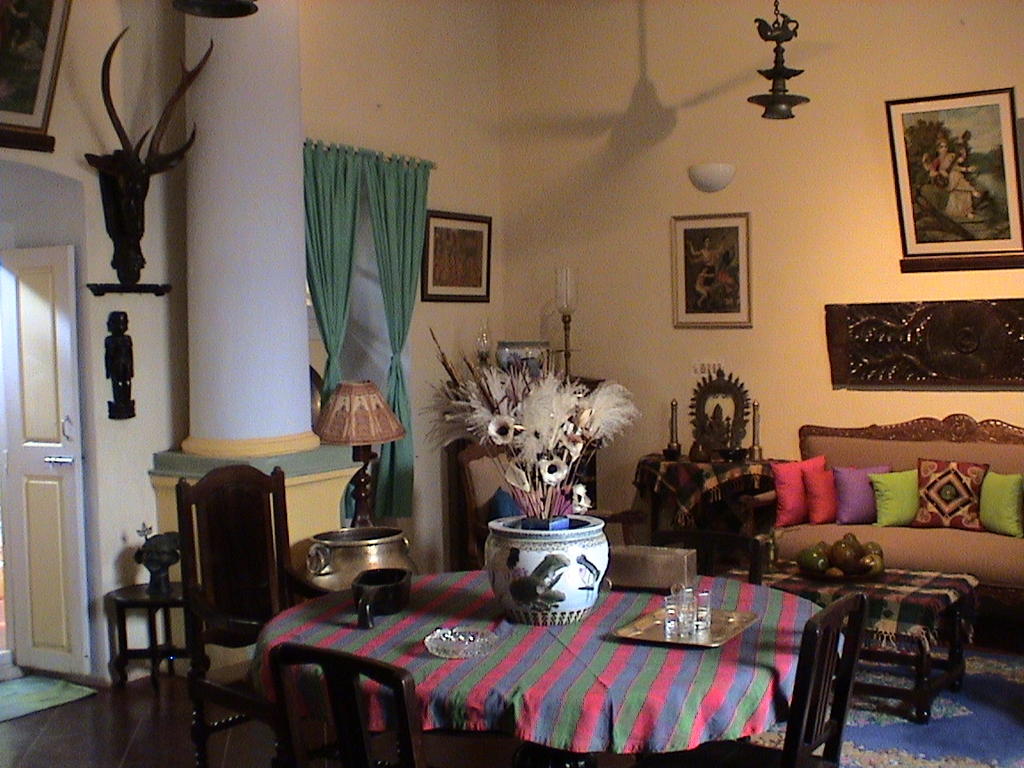
A series of large pillars support the open hall which serves as both the living and the dining room. An eclectic array of curios and antique furniture dots this space –from sea shells to exquisite pottery , from colorful lampshades to terracotta dolls, the mélange is unique . At one end is an antique wooden swing touching the red oxide flooring, at the other are petite breakfast tables and chairs , overlooking the garden. .
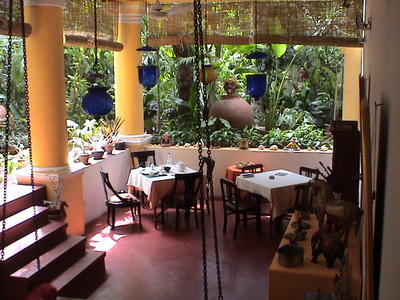


Run by Patricia Michel and her son, Thierry, this guest house currently offers three rooms and a colonial suite with breakfast. Thierry recollecting his childhood, says that this 150 year old bungalow owned by his grandfather was once an arena for cock fights. It is a bit difficult to understand his accented English as he takes us on a tour of his house.


A narrow staircase leads up to two levels, to the rooms which have attached bathrooms and private verandahs as well. Our room was on the first level which was spacious and had the same feel as the hall downstairs. A huge wooden bed covered with mosquito nets is the first thing that meets the eye , placed three feet above the ground . The sun reflects through the stain glassed window panes, creating colorful patterns on the walls .
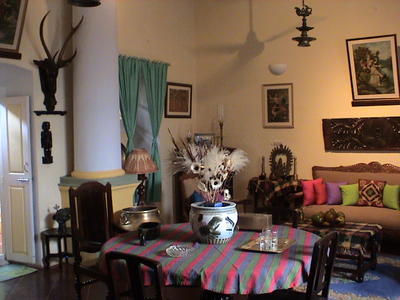


The second part of the guest house is the heritage portion with a kitchen and a living room. A vast expansive suite with a private garden and a lounge is now being renovated and will be soon in the offing. Its almost a house in itself with a living room and a dining area enclosed in that space . Scattered by antiques and artifacts , Thierry calls it a colonial suite while I feel that there is a beauty in that clutter . Every item has been carefully detailed and arranged, be it the wooden furniture or the dry flowers . The walls are adorned with old paintings or with buffalo head mounts . Its like living in a museum, except that this is bright and vibrant .


The duo also manage another colonial guest house which is a home stay and is just a few streets away. In fact Pondicherry is full of them now, complaints Thierry who has come back from France to manage this property . Several bungalows are now converted into hotels and restaurants; we had dinner in one of them called Dupliex, named after the erstwhile Governor General and housed in the former Mayor’s residence . It was not just the food or the experience that we partook, but a large slice of history as well. The trip did give us a hangover, of the colonial variety